Multi-Tenant Kubernetes with Capsule and vCluster
One Kubernetes cluster per team is expensive, and one cluster for everyone is risky. This course builds the two levels in between on your Mac with kind: tenants made of namespaces with Capsule, and virtual clusters with vCluster, running inside a tenant. Along the way, you hear what the people behind these projects said in conversations recorded for udienza.com. The episodes: Capsule and Kamaji at Clastix with Dario Tranchitella, vCluster: GPUs on demand with Piotr Zaniewski, and How the CNCF judges with Bob Killen and Daniel Krook.
You type every command yourself, watch each guardrail refuse something, see what a virtual cluster looks like from the host, and finish with a table that tells you which level a team needs.
The narration is a synthetic voice made from the author's own voice.
What you'll learn
- Group namespaces into tenants with Capsule, and give each team owners who create their own namespaces
- Give an owner her own client certificate, check what she can do, and let her list only her own namespaces and nodes
- Set tenant-wide limits: number of namespaces, a quota for all namespaces together, default limits, network policies and storage classes
- Give a team a virtual cluster with vCluster when it needs CRDs or cluster-admin rights
- Read what a virtual cluster leaves in the host cluster, and how the tenant's limits still apply to it
- Choose between a tenant namespace and a virtual cluster for a team
Who this is for
- • DevOps engineers deepening their expertise
- • SREs building production-grade systems
- • Backend developers expanding into infrastructure
Prerequisites
- • A Mac with Apple silicon and 16 GB of memory or more
- • Colima, kind, kubectl and Helm, set up as in the course "Kubernetes on Your Mac", and the vcluster CLI 0.38.0 (telemetry off: `vcluster telemetry disable`)
- • openssl and envsubst (`brew install openssl gettext`)
- • Basic Kubernetes: namespaces, Deployments, Services, RBAC roles and kubeconfig contexts
Course content
2 modules, 6 lessons, 31m of video
Module 1
3 lessons, 16 min
6 min
Build a three-node kind cluster with the PodNodeSelector admission plugin, install cert-manager and Capsule, create a tenant for each of two teams, and act as a team owner: the namespaces you create join your tenant, the other team's namespace is refused, and a user outside the Capsule group cannot create namespaces at all. The narration is a synthetic voice made from the author's own voice.
6 min
See the permissions Capsule gives an owner with kubectl auth can-i, sign a client certificate for her through the CertificateSigningRequest API and build her own kubeconfig. Then let her list her namespaces and nodes through capsule-proxy.
6 min
Limit what a tenant can use: a maximum number of namespaces, a quota shared by all of them, an allowed storage class, and default limits and a network policy copied into every namespace. Then watch each limit refuse something: a fourth namespace, a premium volume, the eleventh pod, and a request from another tenant.
Module 2
3 lessons, 15 min
7 min
Some teams need a CRD or cluster-admin rights, which a namespace cannot give. Give tenant owners the rights vCluster needs, let the owner create a virtual cluster in her own namespace, and work in it as an administrator: a CRD, an object of that type, and a Deployment.
5 min
Look at the virtual cluster from the host: one StatefulSet, its pods under translated names, the tenant's node selector, quota and network policy still applied to them, and no trace of its CRD. Then pause it and resume it.
5 min
Measure the same nginx in a tenant namespace and in the virtual cluster with kubectl top, compare what each level costs on your Mac, and read the table that tells you which level a team needs. Then delete the virtual cluster and the whole cluster.
Get started
Start Free LessonFirst lesson is always free — no signup required
This course includes
Every lesson, with Pro
All 6 lessons of this course and every other course.
$25 a month billed yearly, or $29 month to month
Until 30 November: $210 for the first year, or $14.50 for the first month, with code LAUNCH.
Your instructor
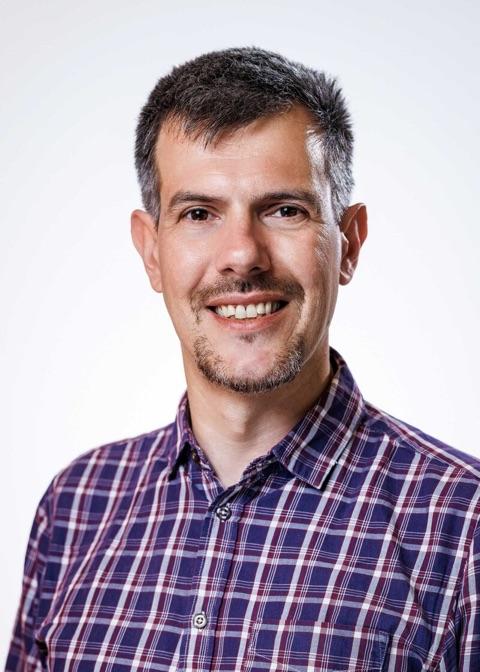
Founder and CEO, Open Empower. About the author
More in AI Homelab on a Mac mini
All courses in this track
Turn a Mac mini into a reproducible homelab server
You will turn an Apple Silicon Mac mini into an always-on home server. You start by planning hardware choices and initializing a Git repository to track your setup steps. This foundation ensures your configuration is documented and ready for automation. You then configure remote access using SSH and Tailscale for secure connectivity. You also adjust power settings to keep the machine running continuously without interruption. Next, you use Homebrew with a Brewfile to manage software packages consistently. You create a Makefile that journals every command and output for full reproducibility. Finally, you add a read-only health check to verify system status. You learn to rebuild the entire setup on a clean machine from your repository.
Beginner · 4 lessons · 15 min · Updated Nov 2026
Preview free lesson
Virtual machines on Apple Silicon
You will build a Linux virtual machine on your Apple Silicon Mac using Colima and the Virtualization framework. You will point Docker to this VM and manage it with simple commands. You will share files between your Mac and the VM using virtiofs mounts. You will run AMD64 container images efficiently using Rosetta translation instead of slow emulation. You will size your VM correctly for your specific Mac hardware to avoid resource issues. You will create a plain Ubuntu VM with Lima for lab environments. You will configure launchd to start your VM automatically when you log in. You will learn to stop and clean up these virtual machines when you are done.
Beginner · 6 lessons · 20 min · Updated Nov 2026
Preview free lesson
Kubernetes on your Mac
You will build a multi-node Kubernetes cluster on your Apple Silicon Mac using kind. You start by creating a single-node cluster and then expand it to three nodes using a configuration file. You install applications with Helm and reach them from your Mac using ingress or Gateway. You also manage persistent storage and resource limits for your pods. You finish by tearing down and rebuilding the entire environment in minutes. You use a Makefile to automate the setup and cleanup process. This ensures your cluster is reproducible and easy to manage. You gain hands-on experience with a real cluster that runs entirely on your laptop.
Beginner · 6 lessons · 23 min · Updated Nov 2026
Preview free lesson